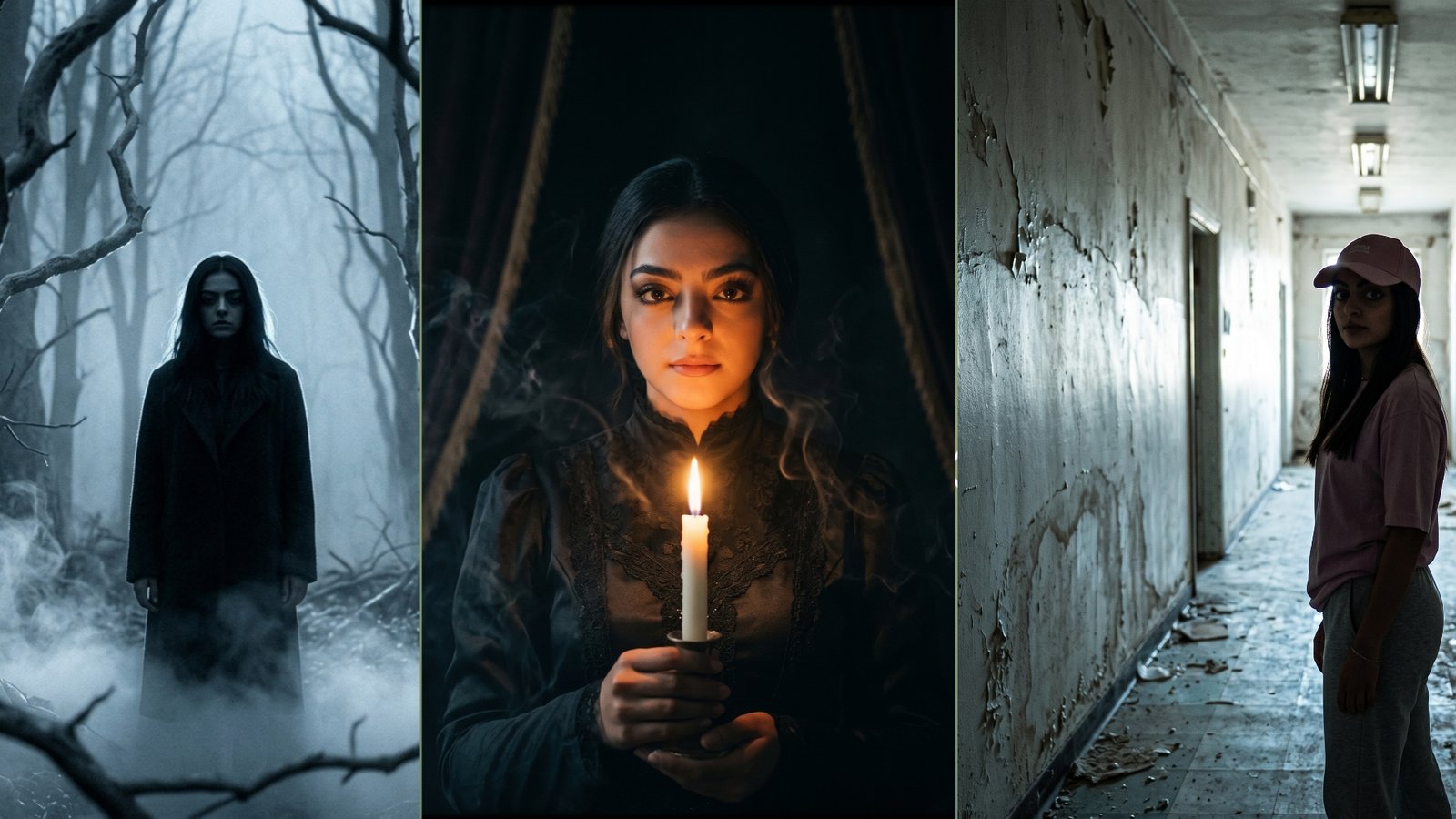
If you want portraits that feel like a still from a psychological thriller, Gemini AI can get you there with the right prompts — moody lighting, fog, cracked mirrors, and that unsettling stare, while keeping the subject’s real face intact.
I’ve spent a lot of late nights testing horror aesthetics in Gemini, mostly because I’m a sucker for anything that looks like a movie poster. What I found is that horror-style portraits are actually one of the more forgiving categories to prompt for, since the genre already leans on strong shadows, desaturated color, and dramatic framing — all things AI image models handle well once you describe them clearly.
In this guide, I’m sharing seven prompts I’ve refined for women’s dramatic horror-film portraits, plus the small wording tweaks that make the difference between a flat result and something genuinely cinematic.
Here’s a quick look at what each prompt creates before we get into the full breakdown.
| Prompt Name | What It Creates | Use Case |
|---|---|---|
| Prompt #1: Candlelit Gothic Portrait | Warm-cold contrast lighting with gothic wardrobe | Moody profile pictures, gothic aesthetic pages |
| Prompt #2: Fog-Drenched Forest Scene | Desaturated forest fog portrait with backlighting | Atmospheric Instagram posts, seasonal content |
| Prompt #3: Cracked Mirror Reflection | Split reflection portrait with a fractured double | Psychological horror themed shoots |
| Prompt #4: Abandoned Asylum Hallway | Long hallway silhouette with harsh single-source light | Found-footage or slasher-style aesthetic |
| Prompt #5: Vintage Film Grain Slasher | Grainy 1980s horror-movie color grade | Retro horror throwback content |
| Prompt #6: Under-Lit Campfire Tale | Under-lighting for classic horror-story face lighting | Nighttime storytelling visuals |
| Prompt #7: Rain-Soaked Window Silhouette | Backlit silhouette through a rain-streaked window | Suspense-driven mood boards |
Why Horror Film Aesthetics Work So Well in AI Portraits
Horror cinematography relies on a handful of repeatable techniques: hard directional light, deep shadow, desaturated or color-shifted palettes, and compositions that feel slightly “off.” Dark, moody photography as a whole leans heavily on shadow rather than flat, even light to create its dramatic effect — horror just pushes that same principle further.
That’s good news when you’re prompting Gemini. The AI doesn’t need to invent subtle catchlight ratios or figure out flattering angles — it needs a clear lighting direction, a color mood, and a location. Horror gives you all three in one word: “candlelit,” “under-lit,” “fog-drenched.” The genre does much of the descriptive work for you.
A few things I’ve learned from testing these prompts repeatedly:
- Name the light source, not just the mood. “Scary lighting” gives Gemini almost nothing to work with. “Single overhead light source casting hard shadows under the eyes” gives it something concrete.
- Desaturation reads as “horror” faster than color does. Pulling warmth out of skin tones and pushing blues or sickly greens into shadows does more for the genre than adding blood or props.
- Small compositional tilts add unease. A slightly crooked horizon makes a viewer feel subtly uncomfortable without knowing exactly why — a trick horror films use to suggest something is watching or off-balance. Mentioning a slight tilt in your prompt carries that same discomfort into the AI output.
- Always anchor the face. Horror portraits often push lighting to extremes, and that’s exactly when AI models are most likely to drift from the reference photo. Every prompt below includes a face-preservation instruction for this reason.
With that groundwork in place, here are the seven prompts.
Prompt #1: Candlelit Gothic Portrait
Concept: A warm, flickering candlelight source against a near-black background, paired with dark gothic wardrobe, creates the classic “haunted portrait” look you’d expect from a period horror film.
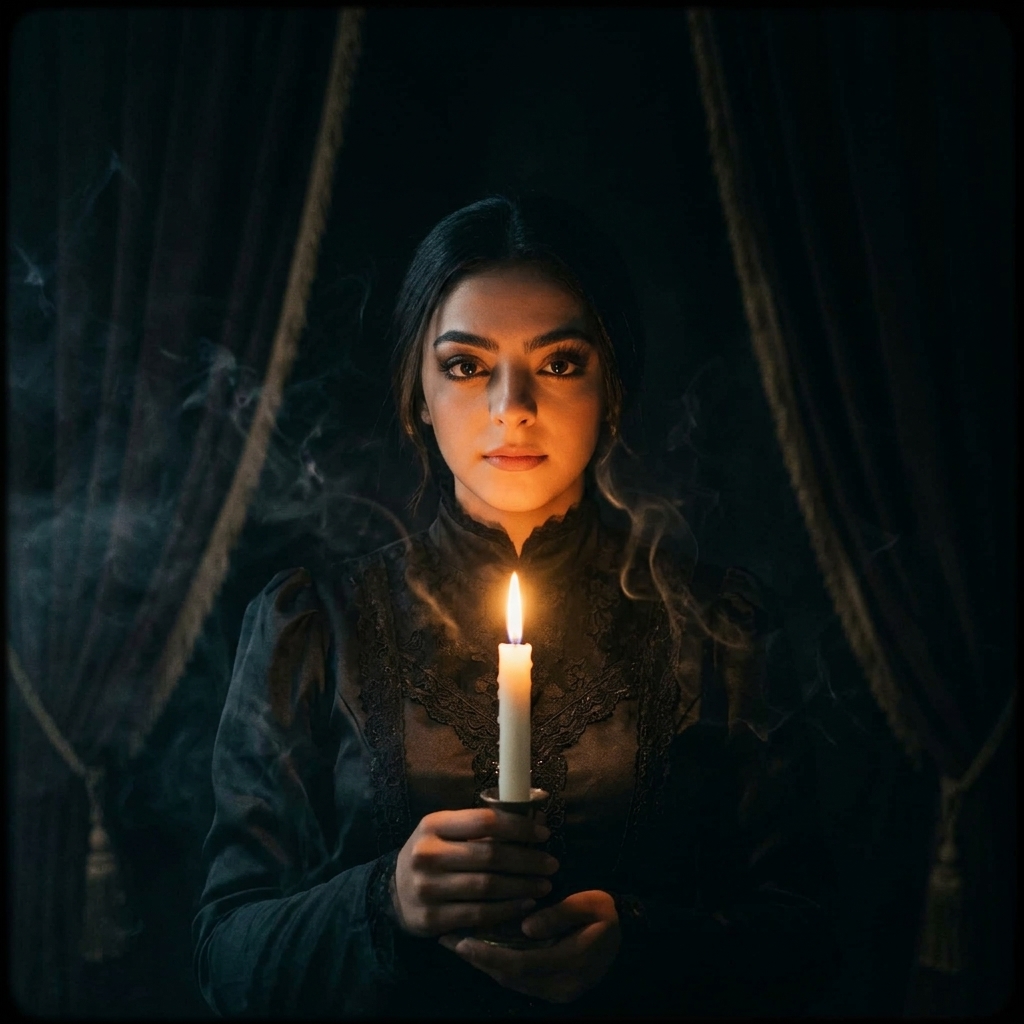
Prompt: Using the uploaded reference photo, generate a dramatic gothic portrait of the woman lit primarily by a single candle held just below her face, casting warm amber light upward across her features while the background falls into near-total darkness. Style her in a dark Victorian-inspired gown with subtle lace detailing. Add faint smoke or mist drifting through the frame. Keep the color grade warm in the highlights and cold in the shadows for a horror-film contrast look. Note: Make sure the prompt includes face-preservation instructions so that the person’s facial features remain consistent with the reference photo(s) and do not change.
Best for: Profile pictures, gothic aesthetic pages, and moody portrait series that lean into a haunted, period-drama feel.
Pro Tip: Ask for the candle to be held slightly off-center rather than dead-center under the chin — it avoids the flat “flashlight under the face” look and creates more natural shadow falloff across the cheekbones.
Explore more: 9 Vintage Film Grain Prompts for Women’s Aesthetic Photos Using Gemini AI
Prompt #2: Fog-Drenched Forest Scene
Concept: Thick fog, backlighting, and a desaturated forest palette turn an ordinary outdoor photo into something that feels like the opening scene of a horror film.
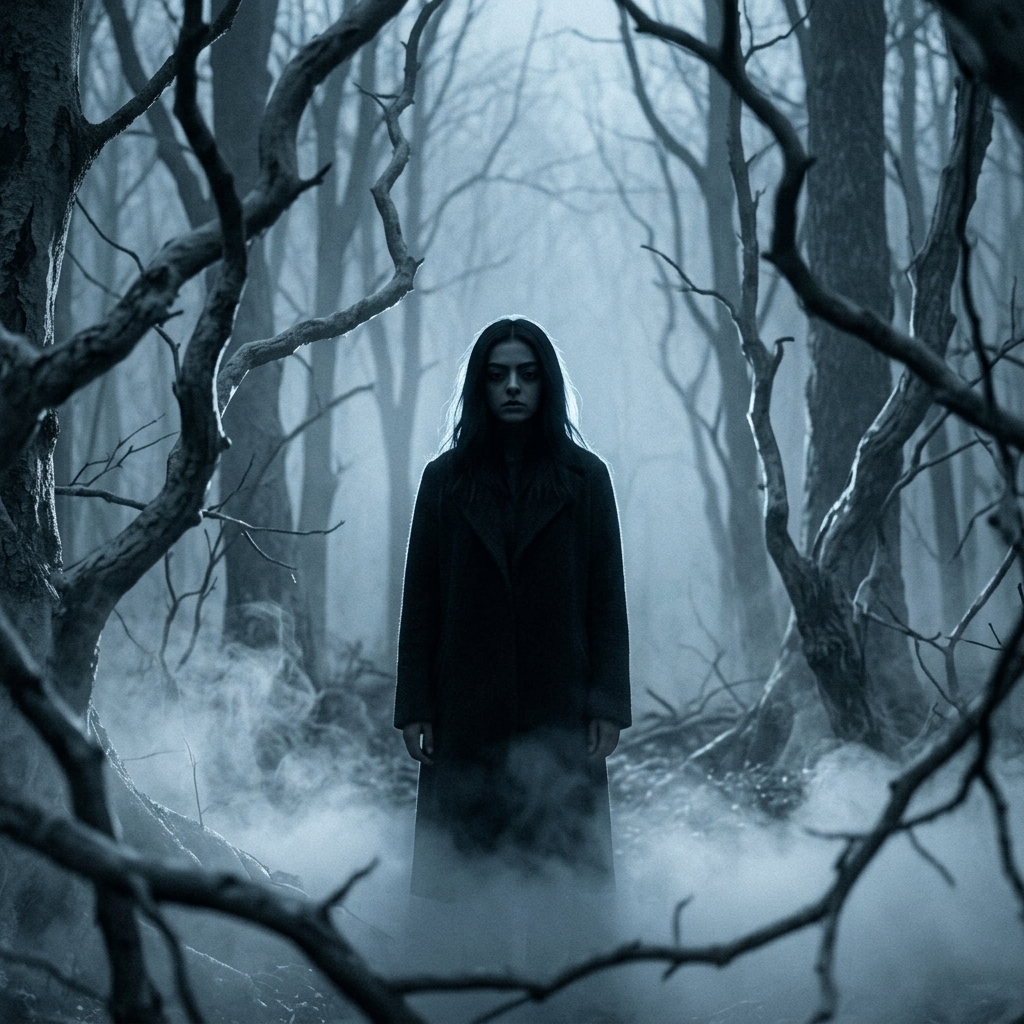
Prompt: Using the uploaded reference photo, place the woman standing motionless in a dense, fog-covered forest at dusk. Backlight her so a pale, cool light rims her silhouette while her front remains in shadow. Desaturate the overall color palette, keeping only faint blue and grey tones. Add visible fog rolling low around her feet and bare, twisted tree branches framing the shot. Note: Make sure the prompt includes face-preservation instructions so that the person’s facial features remain consistent with the reference photo(s) and do not change.
Best for: Atmospheric Instagram posts, seasonal Halloween content, and moody cover photos.
Pro Tip: Specify “waist-up framing” if you want the face clearly visible through the fog — full-body shots in heavy fog tend to obscure facial detail more than you’d expect.
Explore more: 8 Victorian Era Street Gemini AI Prompts for Women’s Historical Portraits
Prompt #3: Cracked Mirror Reflection
Concept: A shattered or cracked mirror splits the subject’s reflection into fragments, a visual shorthand horror films use constantly to suggest a fractured identity or lurking threat.
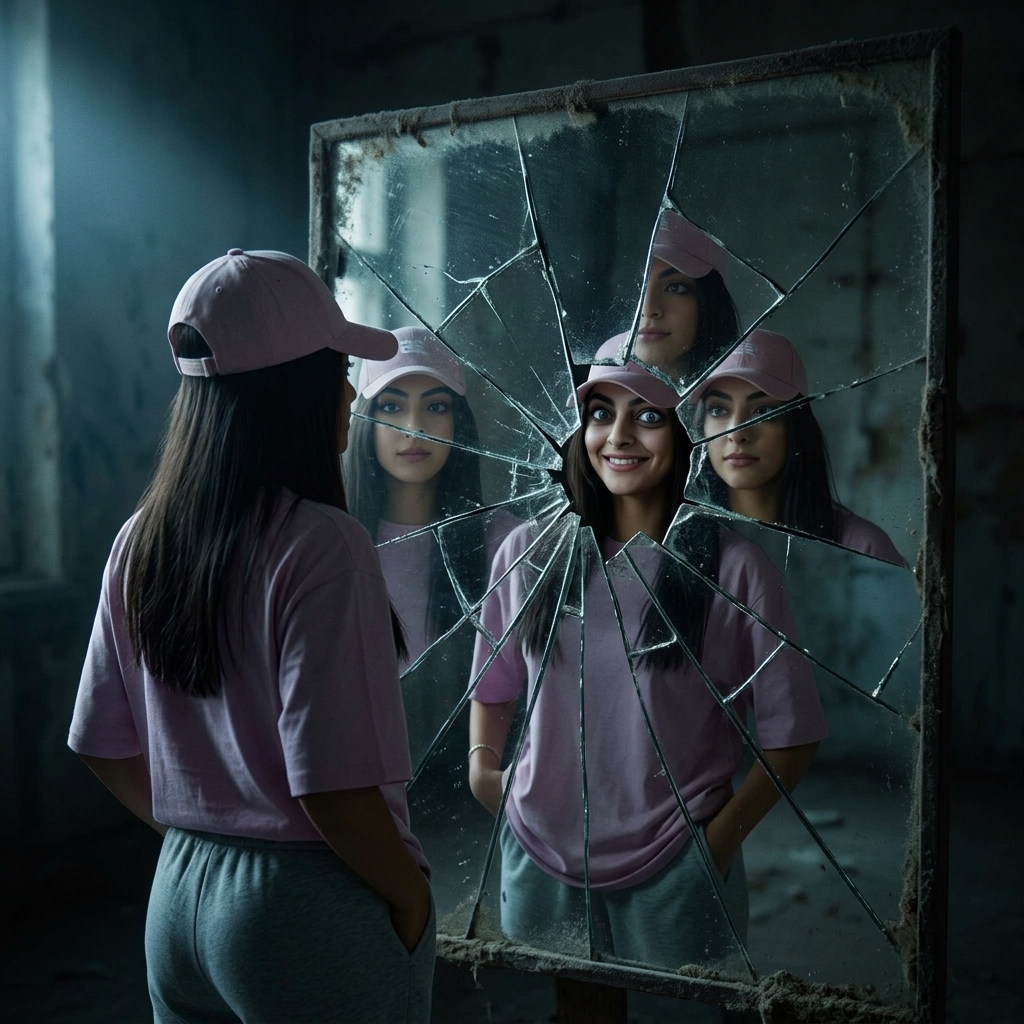
Prompt: Using the uploaded reference photo, show the woman standing in front of an old, cracked mirror in a dimly lit room. Her direct reflection should appear fragmented across the cracks, with one fragment showing a slightly different, unsettling expression than her real face. Keep the lighting low-key with a single cool-toned light source from the side. Preserve dust and grime on the mirror’s edges for realism. Note: Make sure the prompt includes face-preservation instructions so that the person’s facial features remain consistent with the reference photo(s) and do not change.
Best for: Psychological horror themed shoots, “duality” concept posts, and dramatic profile artwork.
Pro Tip: Keep the “unsettling” reflection subtle — a slightly wider eye or tilted head reads as eerie, while anything too extreme can look like a separate person rather than a warped reflection.
Explore more: Film Noir Black and White Gemini AI Prompts for Men
Prompt #4: Abandoned Asylum Hallway
Concept: A long, decaying hallway with a single harsh light source at the far end is one of horror cinema’s most reliable setups, and it translates well into a striking silhouette portrait.
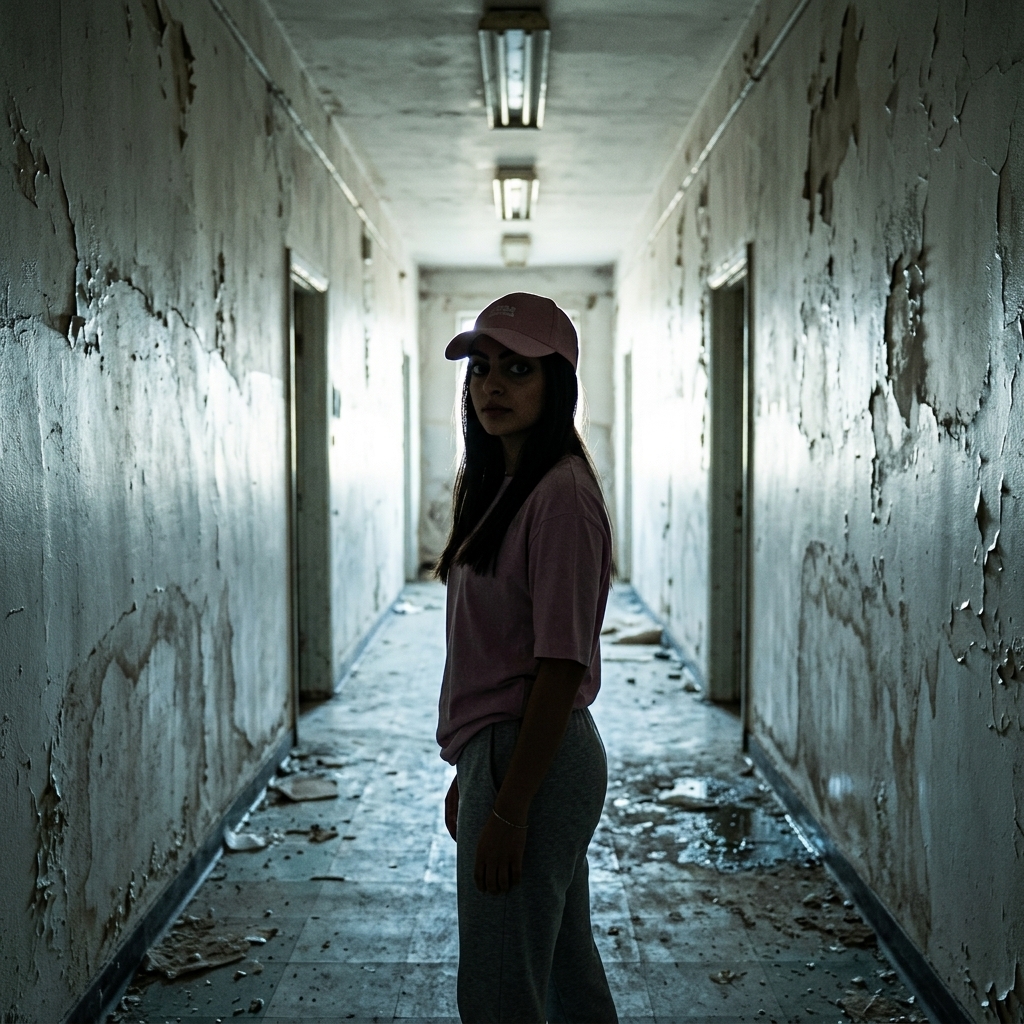
Prompt: Using the uploaded reference photo, position the woman standing partway down a long, decrepit hallway with peeling paint and flickering fluorescent lighting at the far end. Let harsh, high-contrast light spill from behind her, throwing her front into partial shadow while catching the edge of her face and shoulders. Add subtle water stains and debris along the floor for authenticity. Note: Make sure the prompt includes face-preservation instructions so that the person’s facial features remain consistent with the reference photo(s) and do not change.
Best for: Found-footage style content, slasher-inspired aesthetic pages, and dramatic wide-shot portraits.
Pro Tip: Ask for the light source to flicker or appear uneven rather than perfectly even — a slightly inconsistent light sells the “abandoned building” feel far better than a clean studio-style beam.
Explore more: 10 Hollywood Action Hero Gemini AI Prompts for Movie Posters
Prompt #5: Vintage Film Grain Slasher
Concept: Heavy film grain, slightly faded color, and a boxy aspect ratio mimic the look of a low-budget 1980s slasher film — a style that’s having a real resurgence online right now.
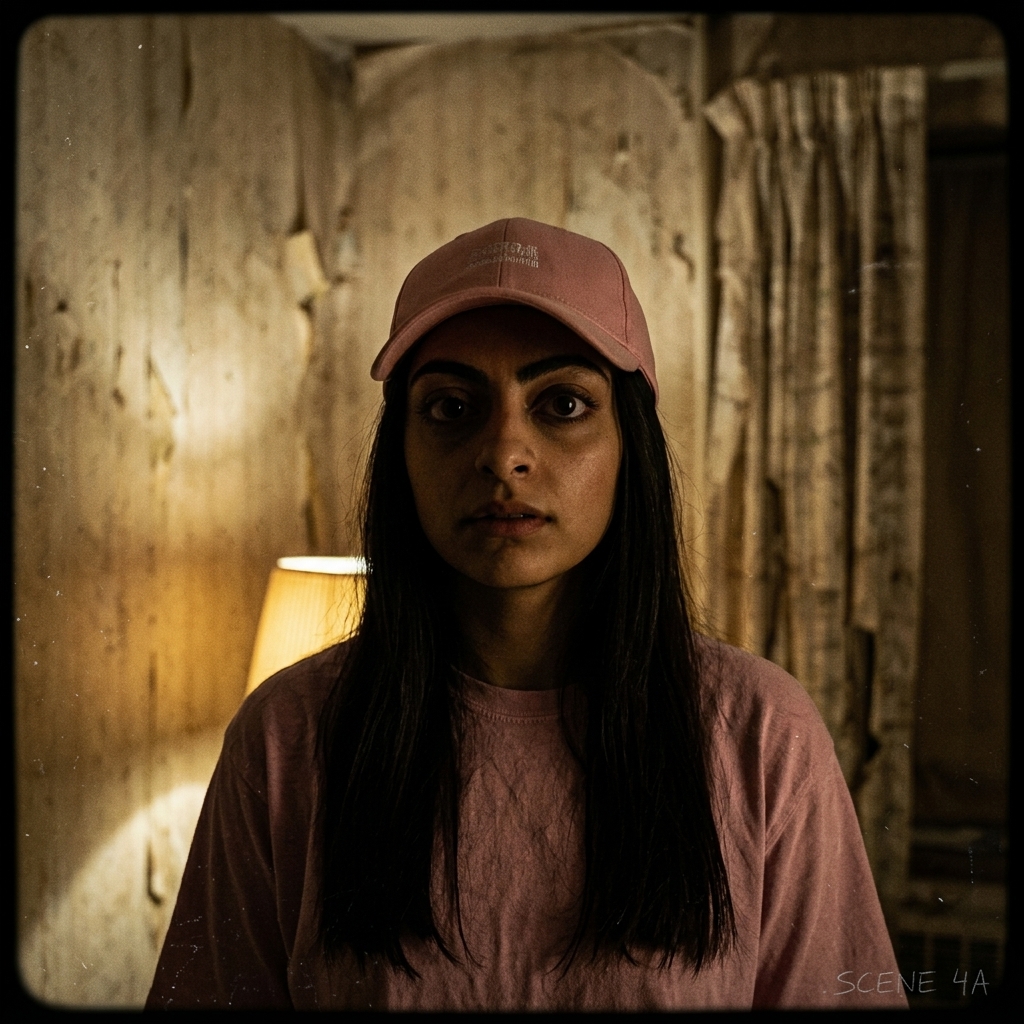
Prompt: Using the uploaded reference photo, recreate the woman’s portrait in the visual style of a 1980s horror film still. Add heavy film grain, slightly muted and faded colors, a subtle vignette around the edges, and warm, inconsistent lighting typical of practical lights from that era. Keep the framing tight on the face and shoulders, as if captured on 35mm film. Note: Make sure the prompt includes face-preservation instructions so that the person’s facial features remain consistent with the reference photo(s) and do not change.
Best for: Retro horror throwback content, nostalgic aesthetic feeds, and vintage-style profile pictures.
Pro Tip: Mention “practical lighting” specifically — it nudges the AI away from clean, even modern lighting and toward the warmer, less uniform look that defines that era of horror film.
Explore more: 8 Trending 90s Retro Sunglasses Gemini AI Prompts for Boys
Prompt #6: Under-Lit Campfire Tale
Concept: Lighting a face from below is one of the oldest tricks in horror, going back to campfire ghost stories, and it still reads as instantly unsettling in a portrait.
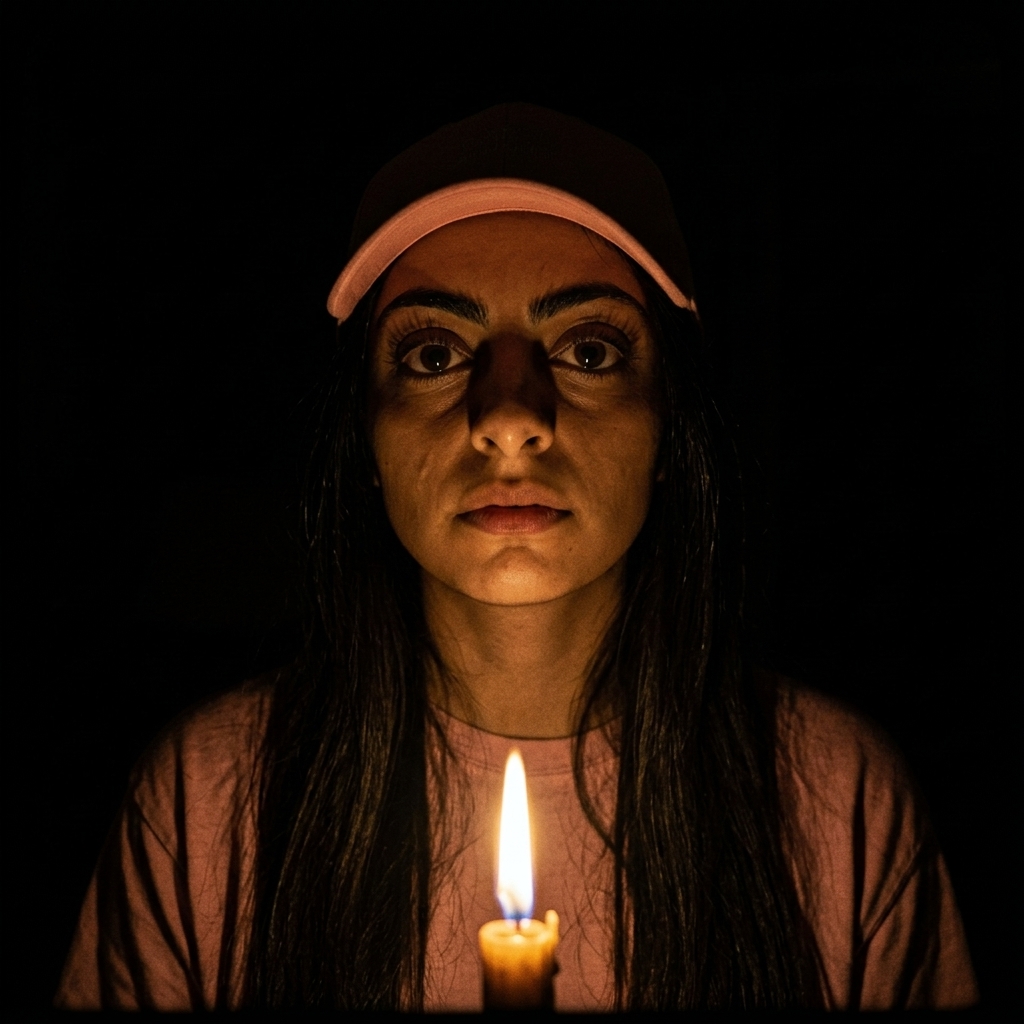
Prompt: Using the uploaded reference photo, light the woman’s face from directly below using a warm, flickering light source as if from a small fire or lantern held at chest height. Let the light cast upward shadows that deepen her eye sockets and emphasize her jawline. Keep the background pitch black so all attention stays on her lit face. Note: Make sure the prompt includes face-preservation instructions so that the person’s facial features remain consistent with the reference photo(s) and do not change.
Best for: Nighttime storytelling visuals, campfire-themed content, and dramatic close-up portraits.
Pro Tip: Keep the light angle slightly off-axis rather than perfectly centered under the chin — dead-center under-lighting can look more theatrical than natural once the image is finished.
Explore more: 8 Nostalgic 90s Disposable Camera Gemini Photo Prompts for Girls
Prompt #7: Rain-Soaked Window Silhouette
Concept: A backlit silhouette seen through a rain-streaked window is a quiet, suspense-driven image — less about shock and more about slow-building dread.
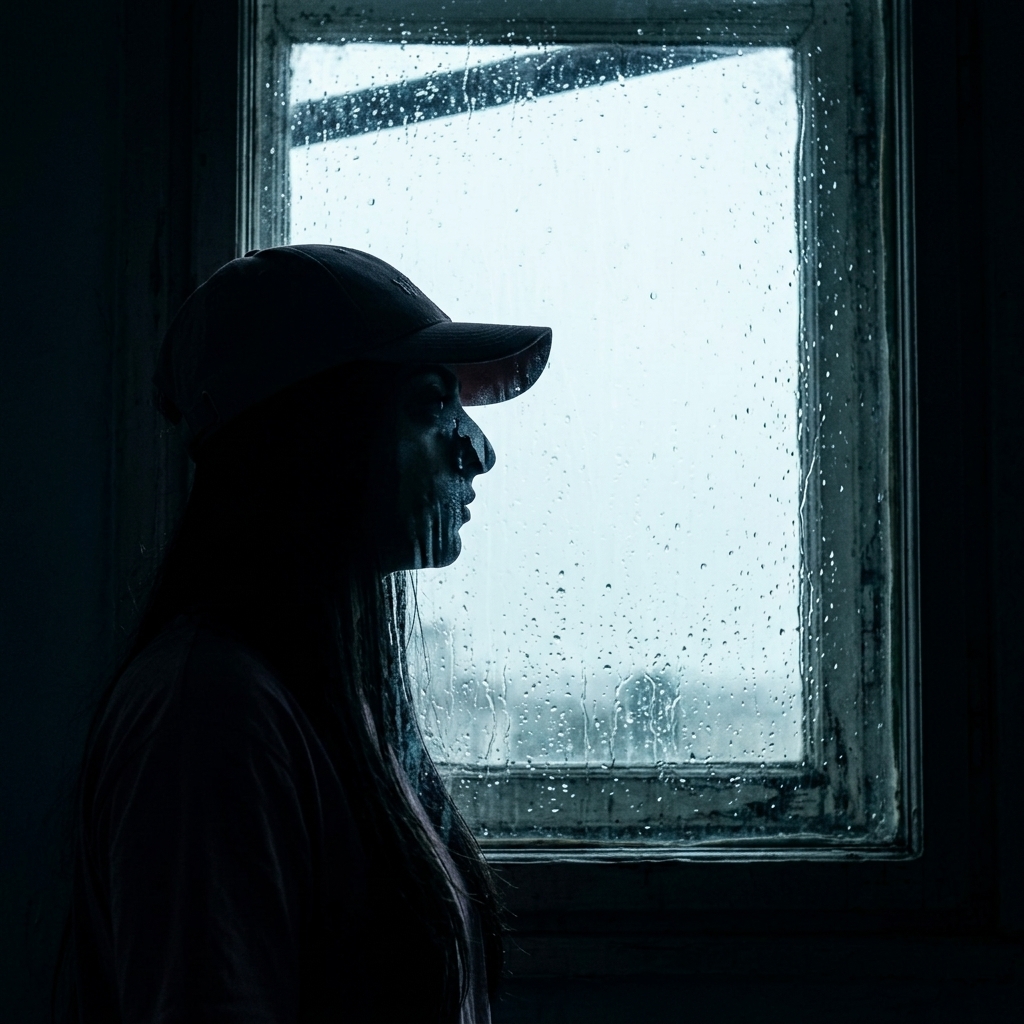
Prompt: Using the uploaded reference photo, show the woman standing close to an old window streaked with rain, seen mostly in silhouette against a pale, overcast light source outside. Let raindrops and streaks distort parts of her outline slightly. Keep the interior in deep shadow and the overall palette cool and desaturated. Note: Make sure the prompt includes face-preservation instructions so that the person’s facial features remain consistent with the reference photo(s) and do not change.
Best for: Suspense-driven mood boards, moody rainy-day content, and quiet, atmospheric portrait series.
Pro Tip: If you want her face at least partially visible rather than a full silhouette, specify “three-quarter profile with faint light catching one side of the face” — pure silhouettes look striking but can lose facial detail entirely.
Explore more: 8 Rooftop City Skyline Gemini AI Prompts for Men’s Night Portraits
Common Mistakes to Avoid When Prompting Horror Portraits
A few issues come up again and again when I test this style, so it’s worth flagging them before you start:
- Overloading one prompt with too many elements. Fog, a cracked mirror, blood, and a hallway all in one prompt tends to confuse the composition. Pick one strong concept per image.
- Forgetting facial preservation. Extreme lighting is exactly where AI models are most likely to alter facial structure, so always include that instruction.
- Asking for gore instead of atmosphere. The strongest horror portraits lean on mood and suggestion rather than explicit gore, and they’re also more shareable.
- Ignoring color grade. A horror prompt without a stated color direction often comes back looking like a regular portrait with a dark background, not a true horror-film still.
FAQ
Can Gemini AI keep my face accurate in dramatic horror lighting?
Yes, as long as you explicitly include a face-preservation instruction. Extreme setups like under-lighting or backlit silhouettes are more prone to drift, so stating that facial features should stay consistent with the reference photo noticeably improves accuracy.
Do I need a real photo of fog, candlelight, or a cracked mirror to get these results?
No. All seven prompts work from a single reference photo of the person — Gemini generates the environment, lighting, and props around it. You don’t need to source or shoot any of the horror elements yourself.
Which prompt works best for someone new to horror-style AI portraits?
Start with the Candlelit Gothic Portrait or the Under-Lit Campfire Tale. Both use one easy-to-describe light source, which tends to produce more consistent results than multi-element scenes like the fog forest or asylum hallway.
Is it possible to make these portraits look less intense for everyday social media use?
Yes. Reduce the emphasis on deep shadow and desaturation, and ask for the horror elements — fog, candlelight, cracked glass — to be “subtle” rather than “dramatic.” That keeps the atmosphere without pushing fully into horror-film intensity.
Final Thoughts
Horror-style portraits are one of my favorite categories to prompt, precisely because the genre already tells you what to ask for: hard light, deep shadow, muted color, and a composition that feels slightly wrong. Start with one of these seven prompts, keep the face-preservation instruction in place, and adjust the intensity of fog, shadow, or grain until it matches the mood you’re after.
Which of these seven feels closest to the look you want — and have you tried mixing two concepts, like fog with under-lighting, in a single shot? Give one a try with your own reference photo and see how it turns out.