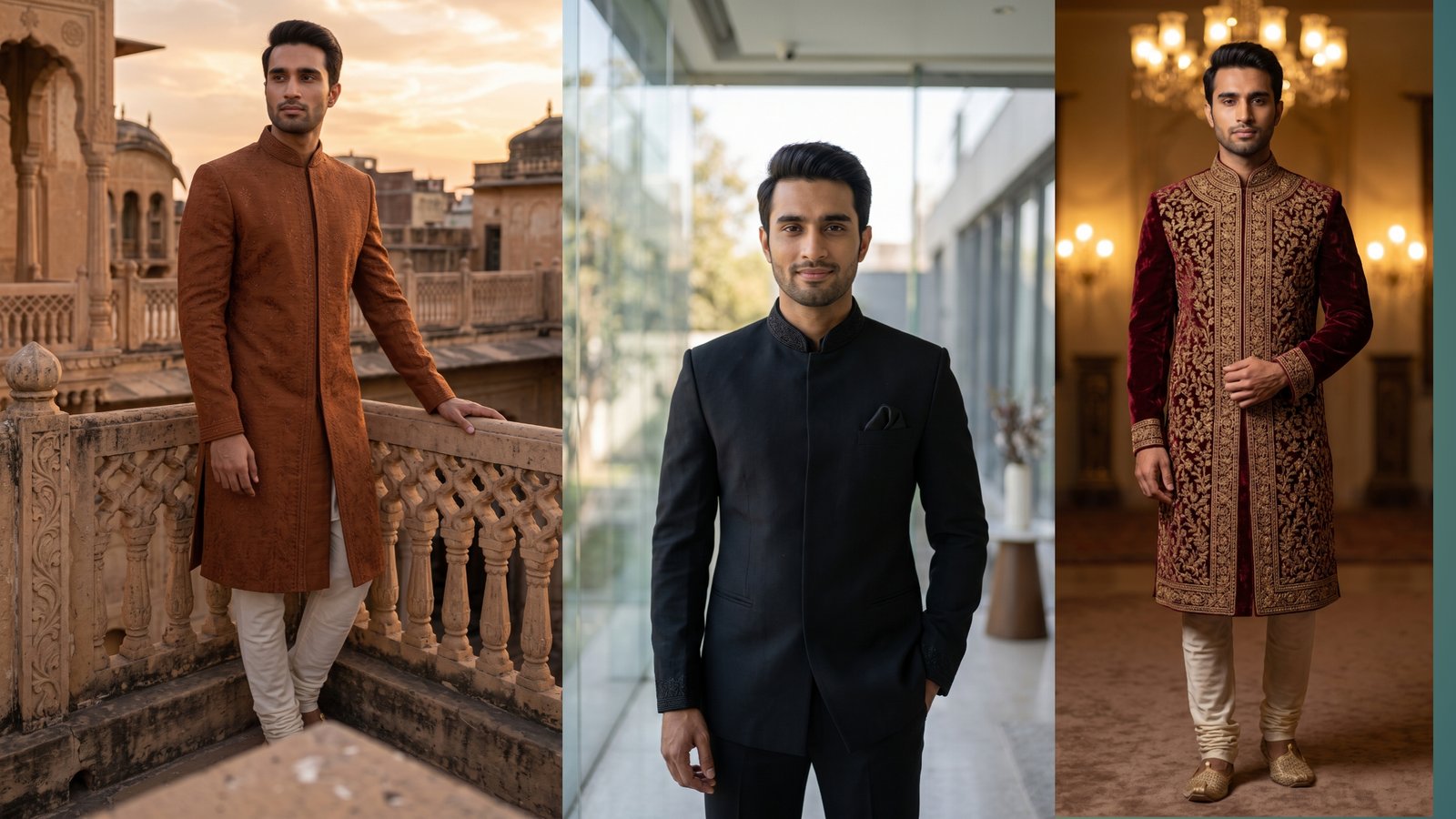
A great sherwani portrait needs three things: a well-lit reference photo, a prompt that describes the fabric and setting in real detail, and clear instructions that lock your face in place. These 8 prompts give you all three, so you can turn one photo into a full set of royal groom looks before you’ve even picked up the phone to your tailor.
Grooms have always been the quiet half of Indian and Pakistani wedding photography — the bride gets the spotlight, and the groom gets a supporting role. Gemini is changing that. With the right prompt, you can preview an ivory sherwani under palace lighting, a black bandhgala on a haveli rooftop, or a maroon velvet sherwani mid-baraat, all from a single selfie. It’s genuinely useful if you’re deciding between fabric colors before a fitting, or just want a striking portrait for your wedding invite.
By the end of this guide, you’ll have 8 ready-to-use prompts, a quick reference table to compare them at a glance, and tips on getting each one to look sharp instead of plastic.
Here’s a quick look at what each prompt creates, so you can jump straight to the look you want.
| Prompt Name | What It Creates | Use Case |
|---|---|---|
| The Palace Portrait | Ivory and gold sherwani in a marble palace courtyard | Wedding invitations, formal groom portraits |
| The Baraat Entry | Groom on a decorated horse during a festive baraat | Pre-wedding social media, cinematic reels |
| The Bandhgala Boardroom | Sharp black bandhgala-style sherwani in a modern indoor setting | Engagement shoots, contemporary groom looks |
| The Maroon Velvet Regal | Deep maroon velvet sherwani with heavy zardozi embroidery | Reception portraits, luxury mood boards |
| The Rooftop Haveli Look | Earthy-toned sherwani on a heritage haveli rooftop at golden hour | Pre-wedding shoots, Instagram-first content |
| The Mandap Ceremony Close-Up | Traditional sherwani portrait under a flower-decked mandap | Wedding day close-ups, family album shots |
| The Nawabi Turban Statement | Sherwani paired with a turban and kalgi for a nawabi look | Sangeet or sehra ceremony portraits |
| The Monochrome Editorial | Black-and-white fine-art sherwani portrait with dramatic shadows | Wedding albums, framed keepsakes |
Prompt #1: The Palace Portrait
Concept: A classic ivory-and-gold sherwani portrait set inside a marble palace courtyard, built for grooms who want a timeless, formal look rather than something trendy.
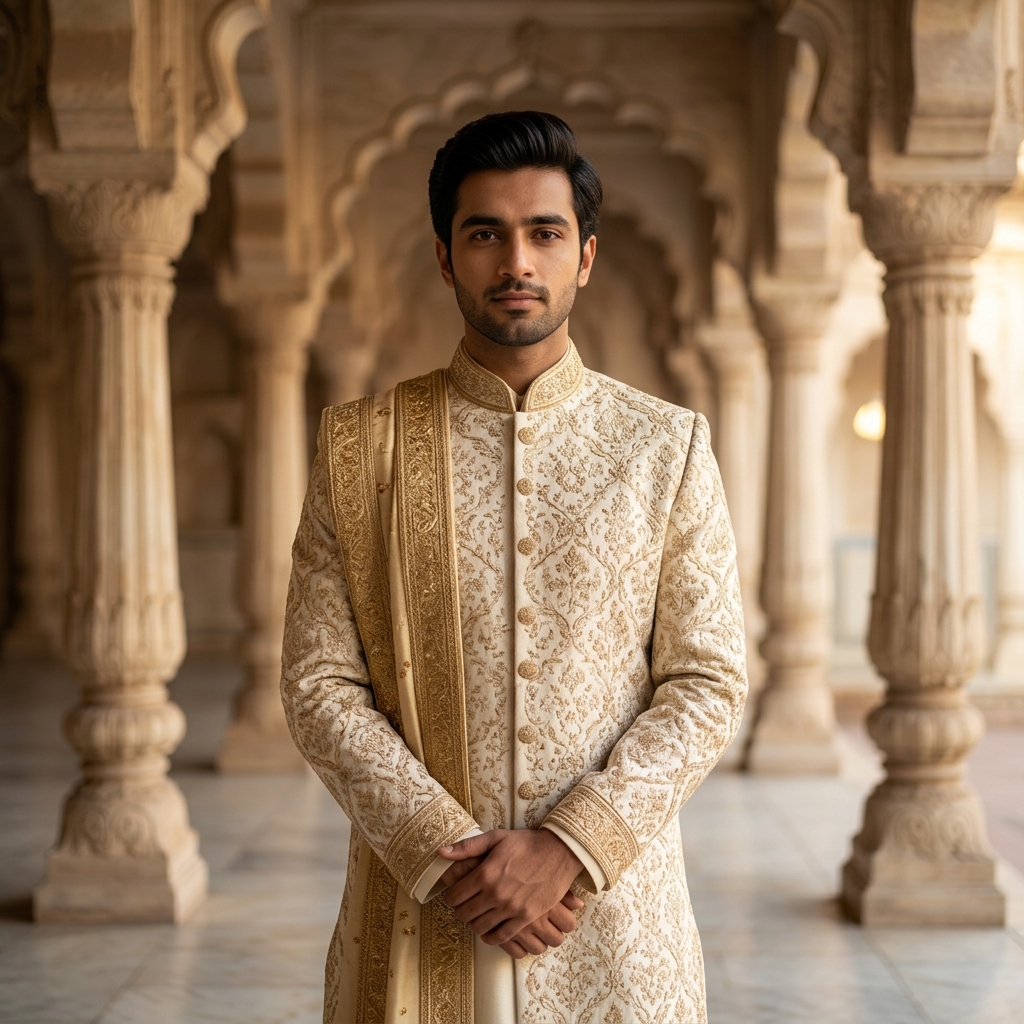
Prompt: “Using the uploaded reference photo, create an ultra-realistic portrait of the man wearing an ivory sherwani with intricate gold thread embroidery, a matching gold stole draped over one shoulder, and a churidar underneath. Place him standing in a grand marble palace courtyard with tall carved pillars and soft ambient light filtering in from arched windows. He stands confidently, hands folded in front, calm and dignified expression. Lighting should be warm and cinematic, highlighting embroidery texture without making the skin look overly smooth or artificial. Keep the facial features, skin tone, jawline, and expression exactly the same as the reference photo — do not alter or reshape the face in any way. Shot in portrait orientation, DSLR quality, sharp focus on the face.”
Best for: Wedding invitation photos, formal family albums, or grooms who want a look that won’t feel dated in ten years.
Pro Tip: Upload a photo where your shoulders and upper chest are visible. Gemini uses that visible area to build the sherwani collar and embroidery line, so a tight headshot alone tends to produce a cropped, awkward result.
Prompt #2: The Baraat Entry
Concept: A festive, high-energy portrait of the groom arriving on a decorated horse during the baraat, with garlands, confetti, and a joyful crowd feel in the background.
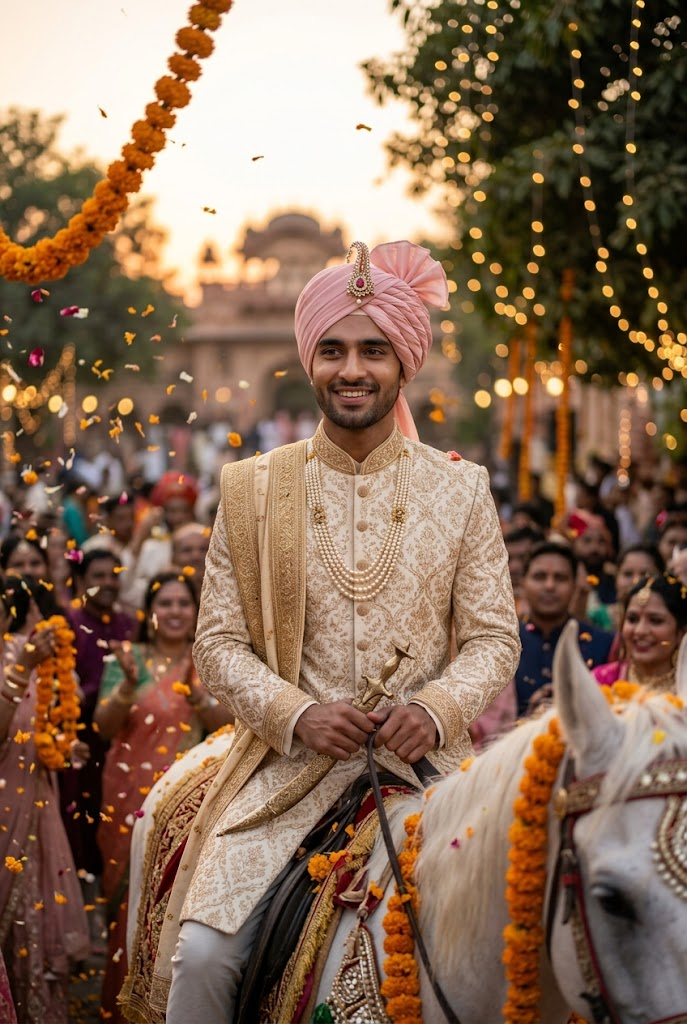
Prompt: “Using the uploaded reference photo, generate a cinematic image of the man dressed in a rich ivory sherwani with a pastel pink safa (turban) and a string of pearls, seated confidently on a decorated white horse during a baraat procession. Surround him with marigold garlands, scattered flower petals in the air, and a softly blurred crowd of celebrating guests in the background, with warm evening lighting and festive string lights for depth. His posture is upright and celebratory, with a genuine, relaxed smile. Preserve his exact facial structure, skin tone, and features from the reference photo without any alteration or beautification. Ultra-realistic detail on embroidery and fabric folds, cinematic depth of field, vertical portrait composition.”
Best for: Pre-wedding social content, baraat-themed invites, or grooms who want a dynamic shot instead of a static studio pose.
Pro Tip: Mention the exact safa color you’re planning to wear on the day. Gemini follows specific color names (“pastel pink,” “deep maroon,” “ivory”) far more accurately than vague terms like “light colored.”
Prompt #3: The Bandhgala Boardroom
Concept: A modern, minimal take on the sherwani — a sharply tailored black bandhgala-style piece shot indoors against clean architectural lines, for grooms who want something less traditional-looking.
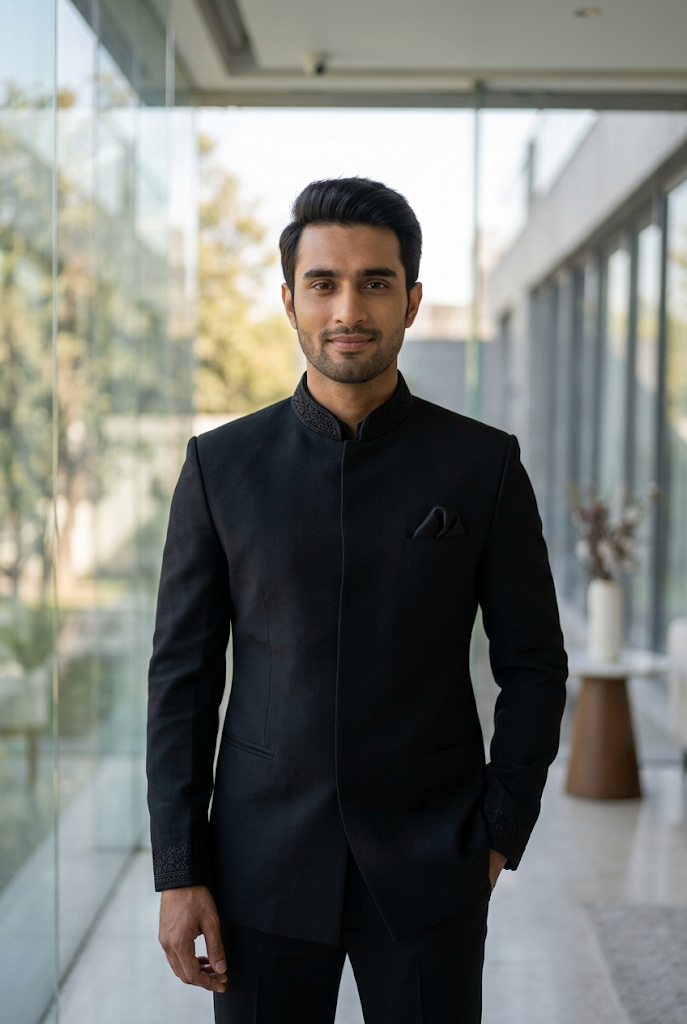
Prompt: “Using the uploaded reference photo, create a photorealistic portrait of the man wearing a fitted black bandhgala sherwani with subtle self-toned embroidery along the collar and cuffs, paired with a matching pocket square. Place him standing in a modern indoor setting with large glass windows, soft natural daylight, and minimal decor. His stance is relaxed but confident, one hand in his pocket, looking directly at the camera with a subtle smile. Lighting should be soft and editorial, avoiding harsh shadows. Keep his face, skin tone, and features identical to the reference image — no reshaping, no altered jawline, no changes to natural skin texture. Sharp focus on the face, shallow depth of field on the background, 85mm lens look.”
Best for: Engagement shoots, LinkedIn-style professional wedding announcements, or grooms who want a contemporary aesthetic over a heavily traditional one.
Pro Tip: If the plain background looks too sparse, add “a few soft indoor plants and warm ambient lighting” to the prompt — it fills the frame without competing with the outfit.
Prompt #4: The Maroon Velvet Regal
Concept: A deep, luxurious maroon velvet sherwani with dense gold zardozi work, designed to communicate weight and richness rather than a flat, printed pattern.
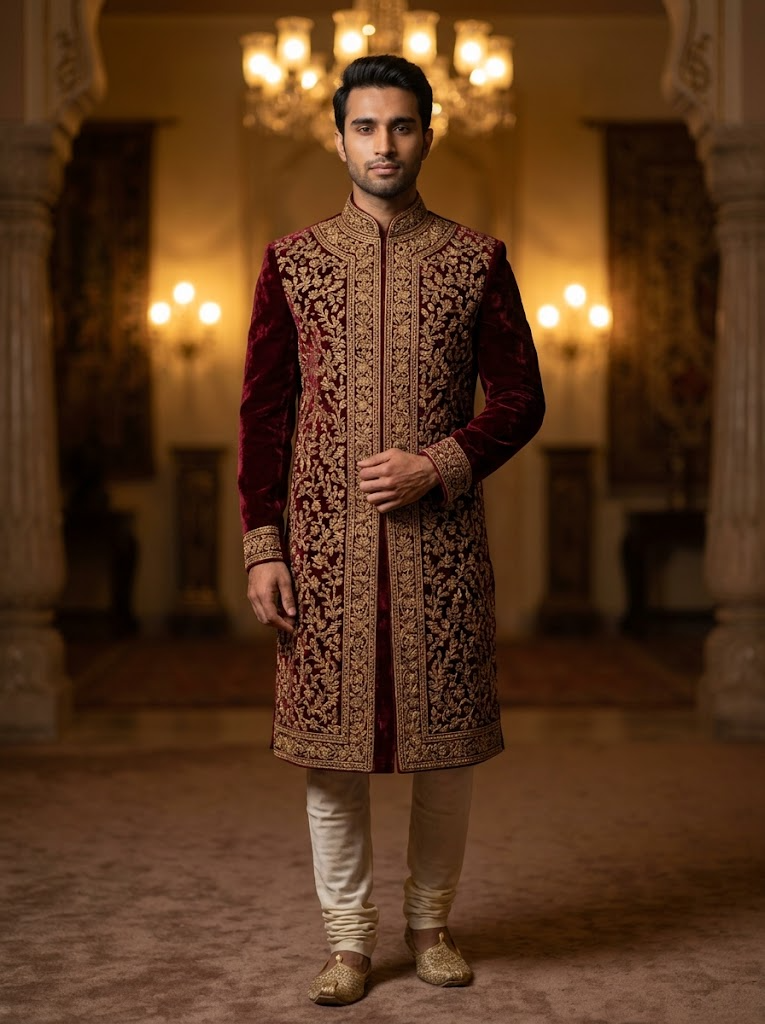
Prompt: “Using the uploaded reference photo, generate an ultra-detailed portrait of the man wearing a maroon velvet sherwani with dense gold zardozi embroidery covering the front panel and collar, paired with a cream churidar and traditional mojari shoes. The velvet should catch and absorb light naturally, showing visible texture and weight rather than looking flat or plastic. Background is a dimly lit royal hall with warm golden lighting and soft bokeh from distant chandeliers. His expression is composed and regal, standing tall, one hand resting near his waistband. Preserve his exact face shape, skin tone, and features from the reference photo without modification. Cinematic color grading, rich shadows, ultra-realistic fabric detail, portrait orientation.”
Best for: Reception portraits, luxury wedding mood boards, or grooms whose outfit is the centerpiece of the whole shot.
Pro Tip: Velvet tends to render as flat and shiny by default. Adding the phrase “fabric absorbs light rather than reflecting it” in your own prompts is the single best fix for that plastic look.
Prompt #5: The Rooftop Haveli Look
Concept: An earthy, golden-hour portrait set on a heritage haveli rooftop — softer and more editorial than a palace shot, built for pre-wedding content.
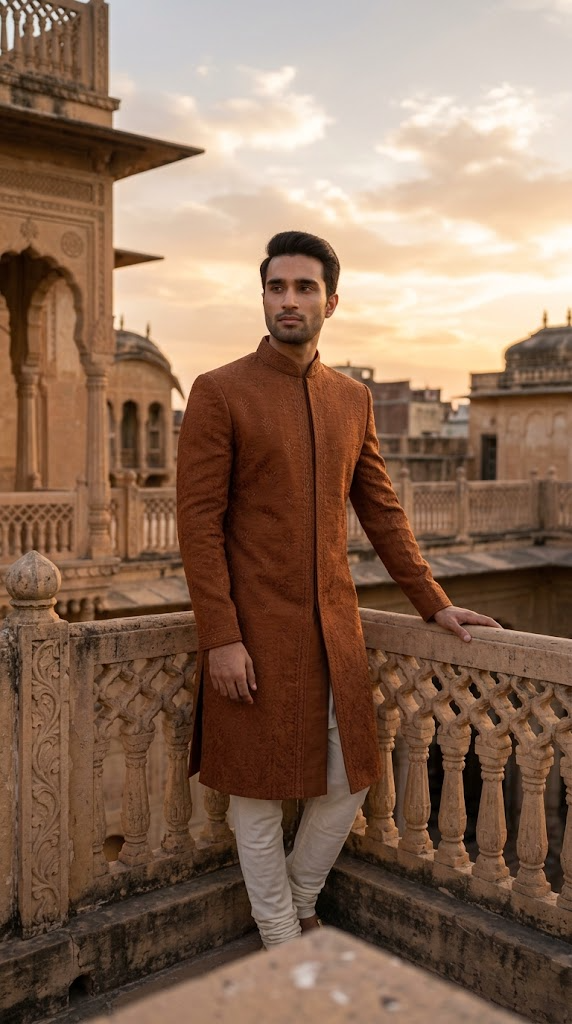
Prompt: “Using the uploaded reference photo, create a golden-hour portrait of the man wearing an earthy brown or rust-toned sherwani with subtle thread embroidery, standing on the open rooftop of a restored heritage haveli. The sky behind him shows warm sunset tones with soft clouds, and the stone rooftop has visible aged texture with traditional jharokha-style railings in the background. Lighting is warm and directional, casting soft shadows across his face. His pose is relaxed, one hand resting on the railing, gazing slightly off-camera. Keep his facial identity, skin tone, and expression completely unchanged from the reference photo. Natural, candid style rather than overly posed, ultra-realistic skin texture, 9:16 vertical aspect ratio.”
Best for: Pre-wedding photoshoots, Instagram reels, or couples doing a joint shoot where the groom’s portrait needs to match a bride’s haveli-themed set.
Pro Tip: Rust, olive, and earthy brown tones photograph especially well at golden hour. If your actual outfit is a brighter color, you can still preview this look separately to compare moods before deciding.
Prompt #6: The Mandap Ceremony Close-Up
Concept: A warm, intimate close-up portrait styled as if captured mid-ceremony under a flower-decked mandap, ideal for a candid-feeling keepsake shot.
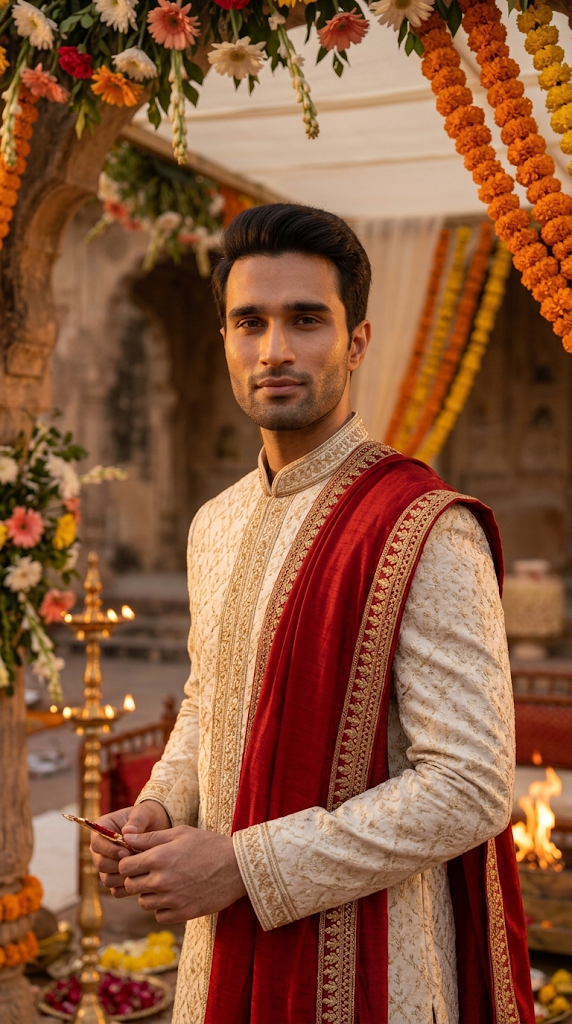
Prompt: “Using the uploaded reference photo, generate a close-up cinematic portrait of the man wearing an ivory sherwani with a red dupatta draped traditionally over one shoulder, standing beneath a mandap decorated with marigold garlands and fresh flowers softly blurred in the background. Warm ambient lighting from traditional diyas casts a gentle golden glow across his face. His expression is calm, warm, and genuine, as though caught in a quiet moment during the ceremony. Preserve his exact facial features, skin tone, and expression from the reference photo — no beautification, no reshaping. Shallow depth of field, warm color grading, portrait orientation, ultra-realistic detail.”
Best for: Wedding day close-ups for the family album, or a keepsake portrait meant to feel like a genuine ceremony moment rather than a studio setup.
Pro Tip: Because this is a tight close-up, start with a reference photo where your face is well-lit and free of harsh overhead shadows — Gemini carries lighting flaws from your original photo into the final result more than people expect.
Prompt #7: The Nawabi Turban Statement
Concept: A full nawabi-style look pairing the sherwani with a structured turban and kalgi ornament, for grooms who want maximum traditional grandeur.
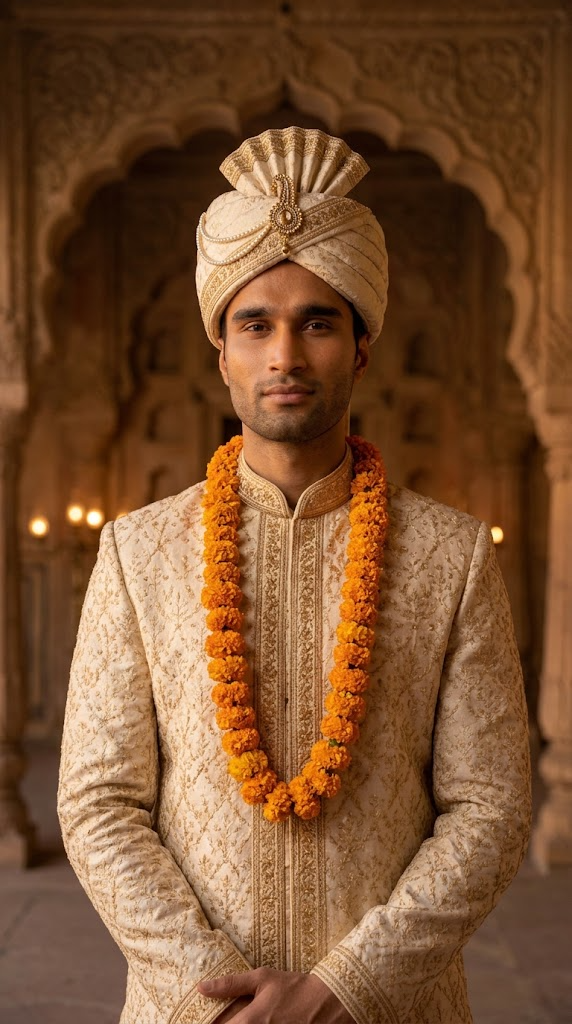
Prompt: “Using the uploaded reference photo, create a regal portrait of the man wearing a heavily embroidered ivory and gold sherwani paired with a matching structured turban featuring a kalgi ornament and a small strand of pearls along one side, plus a marigold garland around his neck. Background is a warm, dimly lit palace hall with ornate arches and soft ambient lighting. His posture is upright and proud, chin slightly raised, hands folded in front. Preserve his exact face shape, skin tone, and features from the reference photo without any alteration to bone structure or expression. Rich, warm color grading, ultra-detailed embroidery and turban texture, sharp focus, cinematic depth.”
Best for: Sangeet or sehra ceremony portraits, or grooms whose families follow a more traditional, regal styling for the wedding day.
Pro Tip: Turbans and kalgis are detail-heavy, so if the first result looks flat, ask Gemini to “add more visible fabric folds and thread texture to the turban” as a follow-up refinement rather than rewriting the whole prompt.
Prompt #8: The Monochrome Editorial
Concept: A dramatic black-and-white fine-art portrait that leans on shadow and contrast instead of color, giving the sherwani’s embroidery a sculptural, timeless quality.
Prompt: “Using the uploaded reference photo, generate a black-and-white fine-art portrait of the man wearing a heavily embroidered sherwani, standing in dramatic side lighting that creates strong shadows across half his face and highlights the embroidery’s fine texture. Background is a plain, dark studio backdrop with a soft gradient. His expression is serious and composed, eyes looking directly into the camera. Preserve his exact facial structure, skin tone under monochrome conversion, and features from the reference photo — no reshaping or altered proportions. High contrast, sharp fabric detail, editorial magazine-style portrait, vertical orientation.”
Best for: Framed wedding album portraits, or a striking single image meant to stand apart from the rest of a color-heavy wedding gallery.
Pro Tip: Monochrome portraits hide color mistakes but expose lighting mistakes. If the face looks flat, ask for “stronger directional side lighting” rather than adjusting the outfit description.
Getting the Best Results From These Prompts
A few small habits make a real difference in how these prompts turn out:
- Use a recent, well-lit, front-facing photo — natural daylight works better than a photo shot under yellow indoor bulbs.
- Name your fabric colors precisely (“maroon velvet,” “ivory and gold,” “rust brown”) instead of vague words like “nice” or “traditional.”
- Ask for one change at a time when refining — swap the background, then the lighting, then the outfit detail, rather than rewriting the whole prompt each time.
- If the face looks even slightly off in the result, regenerate rather than trying to fix it with more instructions — small identity drift tends to compound.
Final Thoughts
A regal groom portrait doesn’t need a professional studio anymore — it needs a clear photo and a prompt that actually describes what you want, down to the fabric and the light. Try one of these eight looks with your own photo and see which sherwani color and setting genuinely feels like your day, before you make that final call to your tailor.
Which of these looks matches the wedding style you’re planning? Try the prompt, tweak the colors to match your actual outfit, and see how close Gemini gets on the first try.
FAQ
Do I need a professional photo to use these prompts?
No. A clear, well-lit photo taken on a phone works fine, as long as your face is fully visible and not obscured by heavy shadows or sunglasses. Front-facing photos with visible shoulders give Gemini enough reference area to build the sherwani collar and embroidery naturally.
Can I change the sherwani color to match my actual wedding outfit?
Yes. Simply swap the color and fabric words in any prompt — for example, replace “maroon velvet” with “navy blue silk” — and keep the rest of the instructions the same. Gemini adapts the outfit description while keeping the pose, lighting, and setting intact.
Why does the face sometimes look slightly different from my photo?
This usually happens when the reference photo is low-resolution, poorly lit, or taken at an extreme angle. Including a clear instruction like “preserve exact facial features, do not reshape or alter” helps, but starting with a sharp, front-facing photo matters more than any wording in the prompt.
Can I use these prompts for a couple’s photo instead of a solo groom portrait?
These prompts are written for solo groom portraits, but you can adapt them for a couple by uploading a photo with both people visible and adding a line describing the bride’s outfit alongside the groom’s. Keep both face-preservation instructions in the prompt so neither person’s features get altered.
Leave a Reply